
At Arsenal’s famed Hale End academy, work is ongoing to transform the setup in the same way the first team has under Mikel Arteta’s leadership.
Led by Technical Director James Ellis - who took the reins in a move that bypassed internal candidates - Arsenal are pivoting towards an aggressive, globalised scouting model designed to turn potential into both trophies and pure profit.
While the talent factory has produced some top players in recent years, there is a sense that more can be done to maximize the academy’s profitability.
Striver Football breaks down the steps Arsenal are taking to truly elevate their academy to the next level.
The end of Per Mertesacker’s reign
In January, Arsenal announced Per Mertesacker would be stepping down as academy head after eight years in the job.
Incidentally, both Mertesacker and Arteta joined the club on the same day as players back in 2011, days after that infamous 8-2 defeat to Manchester United.
Both brought leadership to the club. Arteta spent another five years as a player before retiring to join Pep Guardiola’s backroom staff at Manchester City.
After helping Guardiola build one of the greatest teams the Premier League has ever seen, he returned to Arsenal as manager in 2019. Now, he is on course to guide the side to a historic quadruple at the time of writing.
Mertesacker, on the other hand, spent seven years at the club as a player before retiring to take up the role of head of youth development at the club.
Under Mertesacker, the club have produced players like Saka, Myles Lewis-Skelly, Ethan Nwaneri and Max Dowman.
Despite that track record, the club wanted a more ruthless edge.
Under the Technical Director model, Mertesacker’s reporting lines changed. Arsenal are now looking for a leader who can bridge the gap between "good people" and "high market value."
Mertesacker has left behind solid foundations. According to The Athletic, he initiated the "Strong Young Gunners" philosophy, ensuring that even those who don't make the first team leave as disciplined, elite young men.
The three-pillar Ellis strategy
Why is James Ellis pushing this aggressive drive? According to The Telegraph, it boils down to three blunt realities:
1. The need to dig deeper foundations. While Arsenal’s production of Lewis-Skelly, Nwaneri and Dowman in the last two years has proven their ceiling can peak, there is a need to produce more.
The Arsenal U21s finished eighth in the U21 Premier League last season, which was a wake-up call.
2. The need to avoid spending big in the future. Brighton & Hove Albion have implemented this model with a roar of success. They have signed players like Moises Caicedo on the cheap from overseas, refined them and sold them for massive profit.
3. The need to turn Hale End into a money-minting hub. Following the blueprints of Manchester City and Chelsea, Arsenal aim to generate significant revenue by selling academy graduates who do not quite hit the first-team level but command sizeable fees elsewhere.
Quintero twins show deliberate efforts to cast net wider
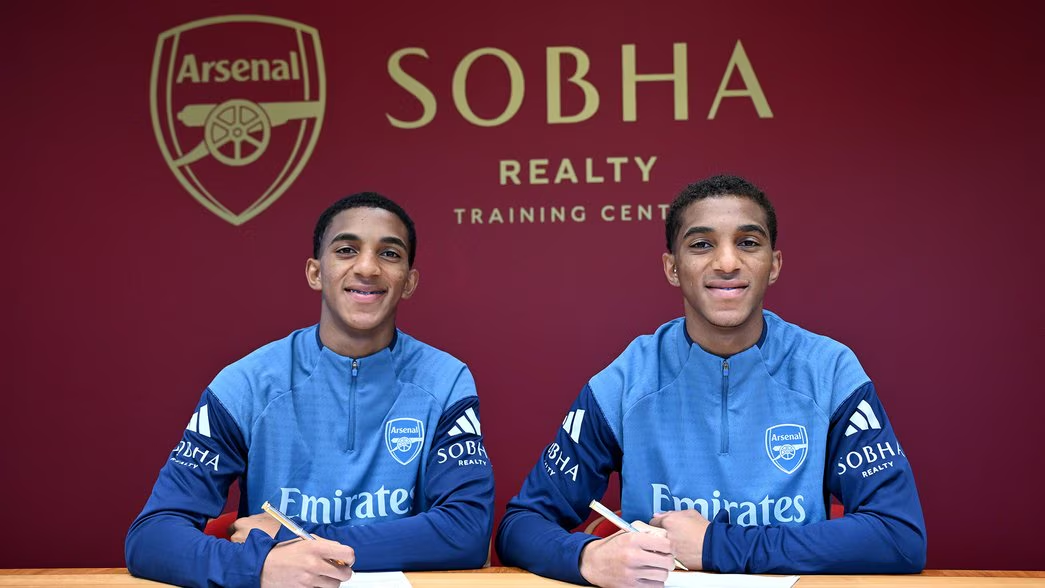
Nothing illustrates the "New Arsenal" more than the deal for Edwin and Holger Quintero.
The club raided Independiente del Valle, the same academy that produced Piero Hincapie, for the talented duo.
Due to the fact Britain are no longer a member of the European Union, it now means Arsenal must wait till they turn 18 to join them. In the meantime, both brothers, 17, will remain in Ecuador.
Edwin is a left-footed, skillful right winger who mirrors the directness of a young Saka.
Holger, meanwhile, is a right-footed attacking midfielder praised for his progressive vision and ability to link play.
This is a sign that the club will take a more active approach, signing young talents from all over the world and not just restricting themselves to UK-born players.
Missing out on James Wilson shows model still needs improvement
The recruitment drive has not been without its stumbles. Arsenal recently lost out on Scottish sensation James Wilson to Tottenham Hotspur.
Despite being in advanced talks for the 18-year-old striker - who is the youngest player to ever represent Scotland - the Gunners were outmaneuvered.
Read More: Everything you need to know about new Arsenal wonderkid Jaden Dixon
Wilson chose the path to Spurs’ Under-21s, a reminder that the competition for "Blue Chip" teenagers is now as fierce as the race for the Premier League title.
They did, however, complete the signing of Jaden Dixon from Stoke City in a late January window swoop, showing they can really get deals over the line with more aggression.
Parting shot
The club’s new academy direction is an indication of progress. The club have built a strong enough culture that they are now able to look forward, rather than back.