AFCON Is Still Fighting for Respect And This Moment Proves Why
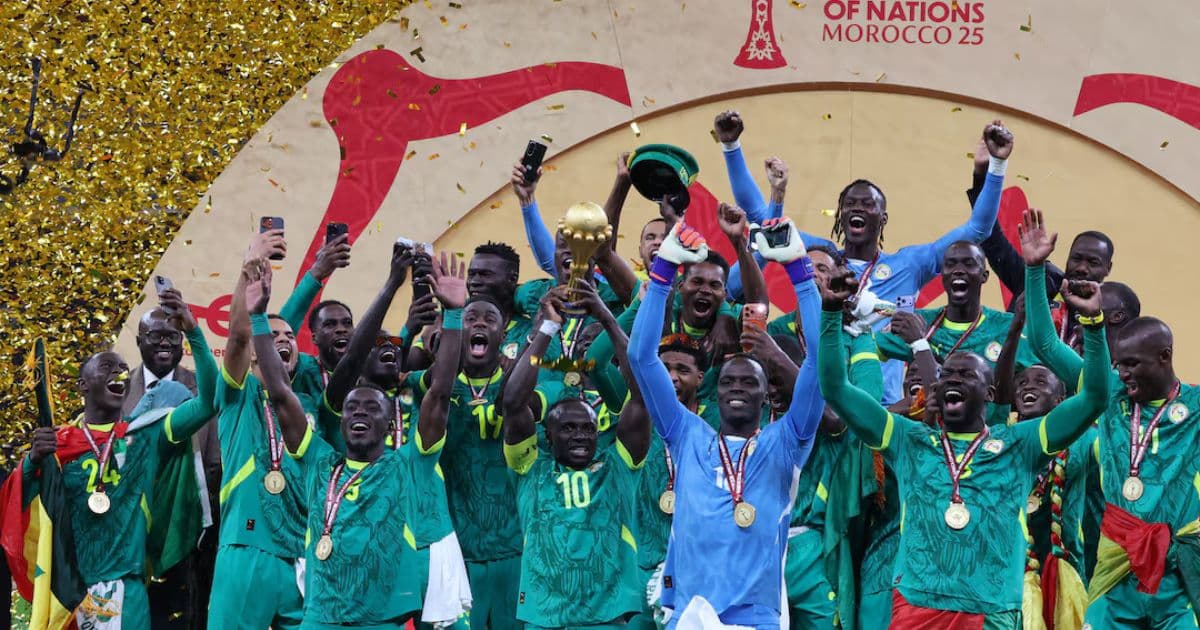
Here is a moment in football when the noise grows loud enough to expose something deeper than the game itself. Events like AFCON 2025 create this moment by bringing together teams from across Africa to compete at the highest level.
Not tactics.
Not form, or even results.
But respect.
Africa Cup of Nations has always existed in this strange space, loved by those who understand it, casually dismissed by those who don’t. And every few years, a moment comes along that reminds you why that dismissal says more about the observer than the tournament.
That moment arrived again this week at AFCON 2025.
The problem isn’t AFCON: People view it through the wrong lens.
What stood out wasn’t just the comment itself, but how familiar it felt.
People still frame AFCON 2025 as an inconvenience rather than a competition. Many treat it as a disruption to club football instead of a pinnacle of international identity. Too often, critics judge the tournament by European standards rather than understand it on its own terms.
That framing has consequences.
It reduces nations to narratives therefore reduces players to absences.
It reduces achievement to background noise.
Yet time and again, AFCON delivers moments of intensity, atmosphere, drama, and meaning that rival any international tournament in the world, especially in events like AFCON 2025.
Why AFCON matters more than people ever give it credit for
This tournament defines careers. Where national pride outweighs commercial value, players don’t “drop out”, they step up. Where fans don’t consume football, they live it.
You only need to watch the opening rounds of this tournament to see it. The organisation. The tactical discipline. The emotion. The pressure of AFCON 2025 are palpable.
This isn’t chaos.
It’s competition.
And it deserves to be spoken about as such.
Football isn’t owned by one continent
here is, however, an uncomfortable truth that moments like this reveal. Too often, the global football conversation defaults to a rigid hierarchy—one in which European competitions are treated as the standard, while everything else is forced to justify its value by comparison.
Yet AFCON does not need that kind of validation. On the contrary, it stands firmly on its own. It has a deep history. It carries a distinct identity. Moreover, it showcases players who shoulder the weight of entire nations, not just clubs or contracts.
Consequently, the frustration does not stem from AFCON’s shortcomings, but rather from the way it continues to be discussed. In fact, AFCON thrives in spite of the dismissive narratives surrounding it, not because of them. And as a result, the upcoming AFCON 2025 does more than mark another tournament—it serves as a powerful testament to the competition’s enduring appeal, relevance, and resilience.
The real takeaway
Because football, at its best, is supposed to connect us, not rank us.
But through reflection, a clearer truth begins to emerge. Because football, at its best, is not meant to divide or measure us against one another. Instead, it is supposed to connect us. In many ways, it serves as a shared language—one that brings together people of different backgrounds, experiences, and identities. Rather than focusing on rankings, statistics, or comparisons, football creates moments of unity, where collective emotion matters more than individual status. Ultimately, when the game is stripped back to its purest form, it reminds us that its greatest value lies not in who stands above others, but in how it brings us together.