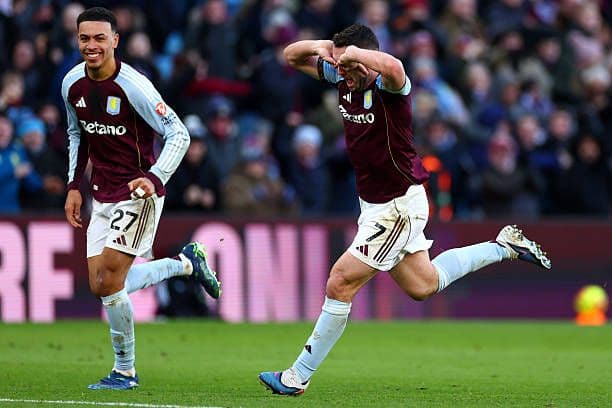
Aston Villa response to their heavy midweek 4-1 defeat at Arsenal could hardly have been more convincing. Goals from Ollie Watkins and a John McGinn brace capped off a dominant display at Villa Park. This fixture also underlined why Unai Emery’s side remain firmly in the conversation near the top of the Premier League table.
From individual revivals to structural strengths, here are the five key takeaways from a Midlands Derby that Villa largely controlled.
- Villa Park has become a fortress
Above all else, this match reinforced just how strong Aston Villa are at home.
An 11th consecutive league win at Villa Park is no coincidence; it is the product of a clear identity, tactical discipline and relentless intensity. Forest struggled from the first whistle, unable to settle and repeatedly making mistakes under Villa’s pressure.
Villa dominated possession, territory and tempo for long spells, particularly in the first half when Forest failed to register a meaningful shot for over 15 minutes. Even when the visitors briefly grew into the contest, the hosts were able to reassert control. The crowd, sensing another statement performance, played its part too. At Villa Park, visiting sides quickly lose momentum, and Villa punish every mistake.
- Ollie Watkins resurgence
Earlier in the season, critics questioned Ollie Watkins’ finishing and debated his prospects with England." That narrative is now shifting rapidly. Watkins goal on the cusp of half-time, a powerful strike from outside the box, was the reward for his persistence after missing an early chance inside the opening two minutes.
What stood out most was not just the goal, but his all-round performance. Watkins pressed aggressively, pulled Forest’s defence out of shape and consistently offered a threat in transition.
His link-up play, particularly with Morgan Rogers, continues to improve, and his confidence in front of goal is clearly returning. With six goals in his last eight matches, Watkins is once again leading Villa’s attack with authority at a time when they need him most.
- John McGinn’s influence goes far beyond goals
John McGinn’s brace will take the headlines, but his impact ran much deeper. From midfield, he set the tone with his aggression, work rate and willingness to drive Villa forward.
His first goal early in the second half doubled Villa’s lead and reflected their fast start after the break, while his second latching onto a goalkeeping error and finishing from long range showed composure and awareness.
It was his first Premier League brace in his career. Remarkably, it was only his second brace in 311 appearances for Aston Villa across all competitions, with the first also coming against Nottingham Forest back in March 2019 during his Championship days.
Crucially, McGinn’s presence was felt most when Forest threatened to swing the momentum. After Morgan Gibbs-White pulled a goal back to make it 2-1, the hosts briefly wobbled, and the atmosphere tensed slightly. McGinn’s leadership helped steady the side, ensuring they did not retreat or lose belief. In a matche like this, his role as tactical leader remains indispensable.
- Forest showed flashes, but their flaws remain costly
There were moments when Nottingham Forest hinted at a fightback. Morgan Gibbs-White’s goal in the second half was taken calmly, and Omari Hutchinson offered brief attacking intent, particularly from wide areas. However, these moments were isolated rather than sustained.
Defensively, Forest looked fragile throughout. Early errors invited pressure, and their inability to play through Villa’s press meant they spent long spells defending deep.
The decisive moment came late on when goalkeeper John Victor’s misjudgement gifted McGinn his second goal, effectively ending the contest. Such lapses have become a theme for Forest and continue to undermine any progress they make during games and with this defeat it leaves them four points above the drop zone.
- Villa’s response highlighted growing maturity and resilience
Perhaps the most significant takeaway was Villa’s mentality. After conceding four goals at Arsenal, this fixture carried the potential for self-doubt. Instead, Villa played with clarity and patience. Despite dominating early without scoring, there was no sense of panic. The breakthrough eventually came, and once ahead, Villa managed the game intelligently.
Even when Forest scored to make it 2–1 and the mood briefly shifted, Villa did not abandon their structure. Chances continued to be created, and the decisive third goal arrived as a result of sustained pressure rather than desperation.
This ability to respond both after a poor result and within a match suggests a side growing in confidence and belief and explanation why they are regarded as having an outside chance of being Premier League title challengers this season.
What's Next For Both Teams?
Aston Villa: Unai Emery's side head to Crystal Palace on Wednesday 7th January [19:30 GMT] and then go to Tottenham in the FA Cup on Saturday 10th January [17:45 GMT].
Nottingham Forest: A trip to West Ham, and a first reunion with Nuno since he left in September, awaits on Tuesday 6th January [20:00 GMT] before Friday's FA Cup third-round game at Wrexham [19:30].