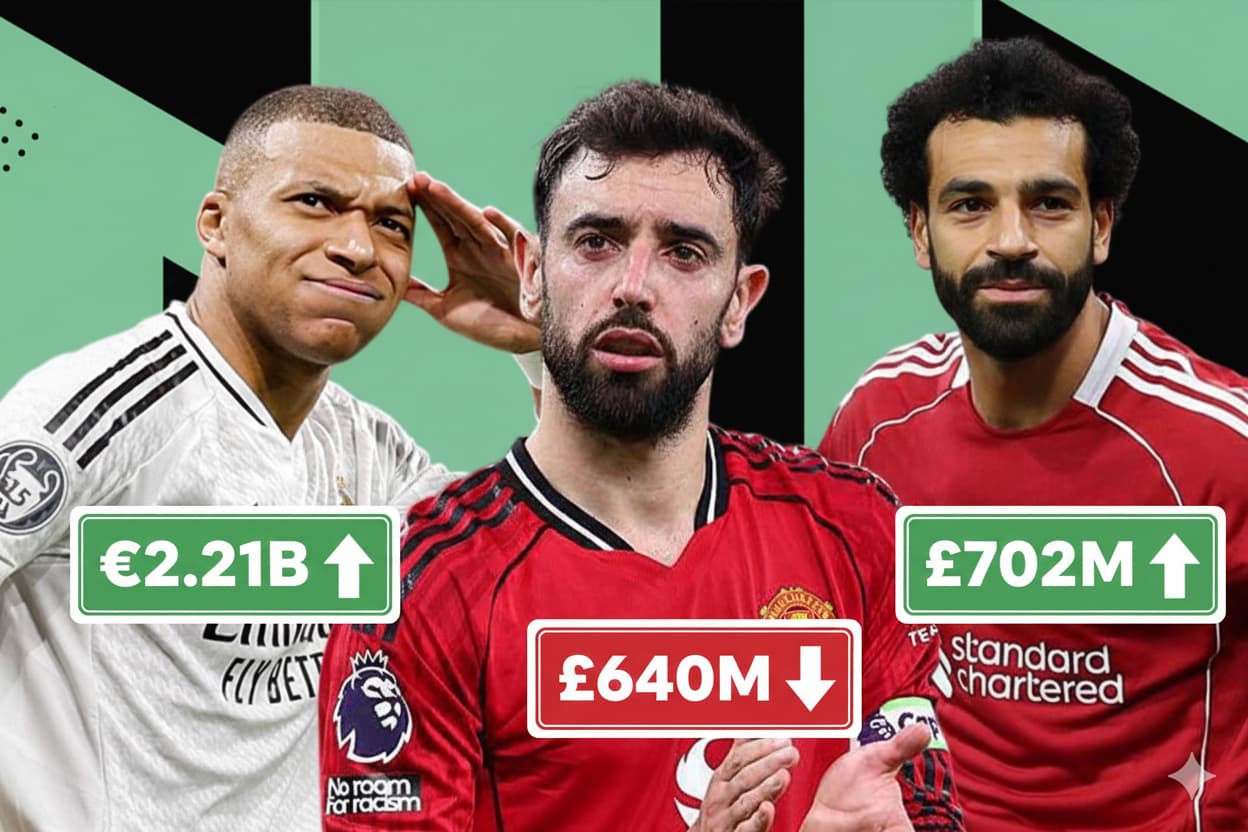
Recently, a report by leading statistics company Deloitte revealed the richest clubs in the world in 2026.
Their findings, which take into account matchday income, commercial revenue and merchandise sales showed most English clubs remain strong money-minting vehicles, while Spain’s biggest teams made the podium yet again.
As the clubs continue fighting for as much superiority off the pitch as they do on it, Striver.Football highlights the 10 richest football clubs in the world for 2026:
Despite a turbulent period of rebuilding over the last three years since Roman Abramovich was forced to put the club up for sale, Chelsea retains a top 10 spot.
Their revenue for the 2024/2025 financial year was boosted by the expanded FIFA Club world cup, a tournament they won. It provided a vital broadcast and commercial safety net that offset their lack of consistent Champions League football.
Their commercial revenue remains stable, but they generated less than 300 million pounds. They rank 10th overall for gate receipts, with Stamford Bridge, whose capacity is inferior to the rest of their English big six rivals, remains a stumbling block.
However, their 72 percent wage to turnover ratio remains a concern. It is mostly contributed by their sizable termination costs given the amount of staff members that have parted ways with the club.
Tottenham Hotspur have fully capitalised on their state-of-the art stadium’s ability to generate revenue all-year round.
The multi-purpose status of the arena, which can also host NFL games and massive concerts, ensures they don’t just rely on matchday income from their games. This has kept them financially competitive despite their perceived lack of silverware.
Tottenham generated a further £287 million (€330m) in commercial revenue for the 24/25 season, which falls short of the 300 million mark.
Manchester United plummeted badly on the financial side in the same way they did on the pitch. A disastrous 15th place finish in the Premier League, a Europa League final loss and a subsequent absence from any form of European football for the ongoing 2025/2026 season saw they broadcast income plummet by over 40 million pounds.
For decades, they were the richest football club in England, but now have to settle for fourth.
Arsenal saw a massive 15 percent revenue jump following their return to Europe’s elite. Their matchday income alone has surged by £50m in just two years.
They also have a healthy wage to revenue ratio, with just 49 percent of their annual income going into wages. Arsenal’s matchday revenue hit £154 million (€183m), one of the highest in the world.
The “sustained” title challenge and return to Champions League football has had a huge impact. The deep run in Europe’s elite competition in 2025 provided a
Manchester City have fallen four places to sixth place in 2026. Their dip is attributed to their poor season by their standards, compounded by an early Champions League exit. This led to a broadcasting revenue loss of 16 million pounds.
Despite the slip on the pitch, City remained a commercial juggernaut. They generated £340.4 million (€405m) in commercial revenue. According to Brand Finance, City remains the most viable brand.
Matchday Revenue: Matchday income stood at £75.1 million, a slight decrease from the previous year. The report notes that City’s growth in this area is currently "plateaued" until their stadium expansion projects are completed.
The fall in broadcast revenue would have been steeper were it not for their participation in the FIFA World Cup, which gave them a small cushion.
Liverpool are the new kings of English finance. For the first time in history, they were the highest earning club in England. Their domestic title win in 2025, as well as massive non-matchday events at Anfield, including Taylor Swift’s record breaking tour, played a huge role.
The stadium expansion also played a huge role. The first full season of the completed Anfield road stand, which pushed capacity to over 61,000 seats, drove matchday income to a record £102 million.
PSG is the sole French representative in the top 20. They cemented their position by winning their first-ever Champions League title in 2025, as well as the run to the Club World Cup final.
PSG's commercial revenue reached £308 million (€367m).Their partnership with Air Jordan and 31 other global partners drove record merchandise sales. The club's online store sales reportedly surged by 210 percent.
In terms of matchday revenue, ticket sales hit up to £147 million (€175m). The club maintains a 98 percent season ticket waiting list, and sold out 170 games in a row. However, there is a sense PSG is being held back by their 48,000 seater Parc des Princes capacity stadium. The club is in agreement with the Paris City Hall to either buy or expand the stadium to a 60,000 seater stadium.
The German giants reclaim a podium spot. Bayern benefited immensely from the new FIFA Club World Cup and remains one of the most commercially efficient clubs in the world, with sponsorship deals that continue to outpace most of the Premier League.
Bayern Munich benefited immensely from the new FIFA Club World Cup, as it pushed their media income to around £211m. Commercial deals remain their primary engine.
Their deep-rooted partnerships with Allianz, Audi and Adidas are valued at £387 million. Matchday revenue at the Alianz Arena clocked at £125 million.
Barcelona has made a staggering return to the top two, with their revenue growing by 27 percent. While they still face debt issues, the sale of one-off Personal Seat Licenses for the reopening of the Camp Nou gave them a temporary financial injection that leapfrogged their rivals.
More impressively, their Wages-to-Revenue Ratio is now at 54%, which is a massive improvement from the complicated "Bartomeu era" . It also puts them within UEFA’s 70% regulatory limit. They also renewed their partnership with Nike, while their e-commerce platform, which operates in 170 countries, allowed them to maximise on Merchendaise sales.
Doing well on the pitch in 24/25 also boosted their broadcasting revenue, as they won the La Liga title and made the UEFA Champions League semi-finals.
The Billion-Euro Club. For the 15th time, Real Madrid is the richest football club on the planet. They are the only club to ever surpass the €1 billion mark in two consecutive seasons.
Real Madrid’s commercial revenue alone hit €594 million (£499m). The Santiago Bernabeu has also transformed into a comprehensive entertainment space. It hosts NFL clashes, and even concerts such as Taylor Swift’s Eras tour. In terms of merchandising, Kylian Mbappe’s arrival before the start of the 2024/2025 season was a key factor. Their matchday revenue also soared to €233 million (£196m).
While no English club made the top five, the fact that the Premier League’s big six made the first 10 “rich list” shows how the Premier League has become a de-facto European Super League.
However, over-reliance on TV revenue is now being surpassed by maximising on making stadia multi-purpose, as Real Madrid and Tottenham have done with their arenas. On-pitch success remains the hallmark of the sport, but off-pitch success is perhaps just as important in the quest to be among the richest football clubs in the world.